Cotton Isn’t Basic Anymore — Rahul Mishra’s New Collection Wants to Prove It
For Rahul Mishra, a fabric that most of fashion treats as foundational and unremarkable is actually the argument he’s been building toward his entire career. His fall 2026 collection for AFEW, presented at Lakmé Fashion Week and titled “White Gold,” positions cotton not as a starting point but as a destination — the endpoint of a more considered, more humane vision of what luxury should actually mean in this particular moment.
The collection’s title carries historical weight that goes well beyond aesthetics or branding. “What the British were taking away from India was ‘white gold’ meaning cotton, to feed their Manchester mills,” Mishra said — reclaiming a colonial-era term and reloading it with dignity, craft, and economic argument. The name doubles as a provocation, asking the industry to reconsider which materials it assigns prestige to, and why that hierarchy exists.
To build the technical case for cotton as a luxury fiber, Mishra partnered with Supima, the American premium cotton supplier, and brought in his longtime collaborator, master weaver Hukum Kohli. Together they blended Supima yarn with silk, pushing the resulting textile to a point of near-dissolution. “It is finer than tulle, finer than organza, finer than anything you can ever touch,” Mishra said. “It feels like air. It’s really magical.” That’s not marketing language — it’s a description of an actual material achievement rooted in two decades of work with Indian handloom traditions.
The collection’s emotional architecture runs from beginning to end of life. “When a child is born, the first external touch is cotton fiber. And when you die, you are wrapped in cotton fabric. From beginning until end, this fiber stays with you,” he said. That framing lifts the collection out of pure craft conversation and places it inside a philosophical one, asking what luxury owes to the people and cultures that produce it. For a fashion season that has been heavy on spectacle and short on meaning, that’s a refreshing entry point.
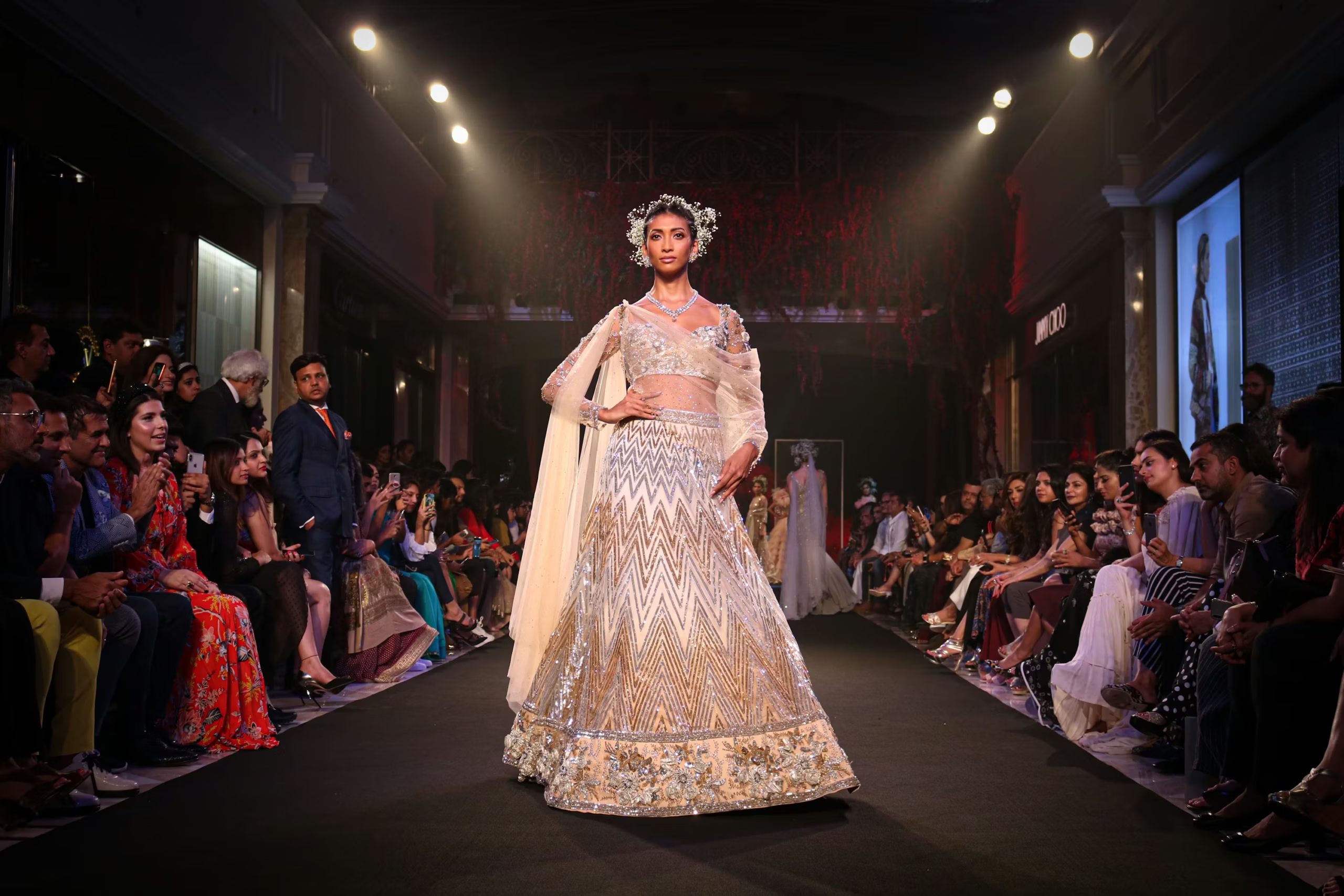
The opening look — a sharply constructed ivory jacket over a short pleated skirt — establishes the collection’s central tension from the first frame. Precision and lightness coexist in the same breath, in the same garment. A luminous boned corset bodice paired with a softly draped white skirt that moves with the body deepens the argument: structure need not mean stiffness, and delicacy need not mean fragility.
What makes the AFEW platform worth paying attention to is precisely the kind of work it attracts. Mishra isn’t at a Paris maison with a marketing department managing his output — he’s working out of New Delhi, making decisions that are rooted in Indian craft economy as much as in runway aesthetics. That independence shows in the collection’s coherence, which feels earned rather than engineered.
The sustainable luxury conversation in fashion has become so crowded with performative pledges and marketing-department sustainability reports that it’s lost most of its credibility. Mishra’s approach cuts through that noise by doing rather than declaring — the sustainability argument in “White Gold” emerges from the work itself rather than from a press release attached to it. That distinction matters more than the industry typically acknowledges.
“How much time has gone into making the product makes it luxury,” Mishra said, “and how much time it retains the love of its owner also defines luxury.” That dual definition — luxury as craft investment and luxury as emotional durability — is a meaningful challenge to the industry’s current fixation on brand amplification and cultural cachet as the primary value drivers. It’s also a harder argument to fake.
Twenty years have passed since Mishra’s Lakmé debut, a student collection built around Kerala’s handloom cottons. His return to cotton in 2026 isn’t nostalgic — it’s argumentative. He’s using the same raw material to make a completely different case: not that cotton is worth celebrating because it’s traditional, but that it’s worth elevating because, done correctly, it outperforms everything else. The Supima denim introduced for structural counterpoint makes the same point through contrast.
The broader industry context makes the timing of this collection sharper. With luxury conglomerates facing scrutiny over supply chain ethics, and with cotton textile workers — a sector that has shed 16 percent of its workforce globally since 2023 — bearing the weight of fashion’s efficiency obsession, Mishra’s insistence on slow, hand-driven production is less a romantic gesture and more a structural rebuttal. Whether the industry’s buyers and editors receive it that way is another question entirely. But the collection exists, and it makes its case without asking permission.