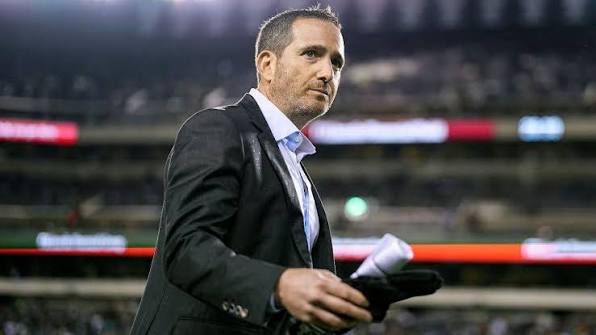
Howie Roseman’s Net Worth in 2026: What We Know About the Eagles GM’s Fortune
Howie Roseman’s net worth has increased significantly in recent years amid his continued success.
Howie Roseman has built a reputation as one of the most effective front-office minds in the NFL, and that success has fans and football business analysts increasingly curious about what it’s translated to financially. As with most NFL executives, there’s no official disclosure of his finances — but here’s what current estimates suggest.
Estimated Net Worth
Public estimates of Howie Roseman’s net worth in 2026 vary fairly widely, generally landing somewhere between $40 million and $95 million. That’s a wide spread, and it reflects a simple reality: unlike player contracts, which are matters of public record through the NFL Players Association, executive compensation packages are private. Analysts are left working backward from Roseman’s tenure, title, and industry benchmarks rather than any confirmed figures.
His annual salary is commonly estimated in the range of $7.5 million to $12 million, which would place him among the better-compensated executives in professional football — in the same financial tier as a solid starting quarterback, though earned from the front office rather than the field.
Where the Money Comes From
Roseman’s income is generally attributed to a few sources:
Executive salary. As Executive Vice President and General Manager of the Philadelphia Eagles, his base compensation reflects both his seniority and his track record.
Performance bonuses. Front-office bonuses tied to team success — playoff runs, division titles, and championships — are standard in NFL front-office contracts, and Roseman’s has been unusually decorated in recent years.
Long-term incentives and deferred compensation. Executives at his level typically have multi-year deals that include vesting bonuses and long-term incentive structures rather than a single flat salary.
Investments. Some estimates point to real estate and diversified financial holdings as a secondary contributor, though specifics aren’t publicly documented.
The Career Behind the Wealth
Roseman’s path to the top of the Eagles organization has become something of a case study in football operations circles precisely because he never played the game professionally. Born on June 23, 1975, in Brooklyn, New York, he reportedly began writing letters to NFL teams as a teenager, angling for any way into the league. He studied at the University of Florida before attending Fordham University School of Law, giving him a legal and analytical foundation that would shape his front-office career.
He joined the Eagles in 2000 as an intern working in salary cap and administrative functions, and climbed steadily through the organization over the following decade. By 2010, he had become the youngest general manager in NFL history at the time — a title that underscored both his rapid rise and the unconventional route that got him there.
Since then, Roseman has become known for aggressive but calculated roster construction: creative use of the salary cap, a willingness to trade draft assets strategically, and heavy reliance on analytics in personnel decisions. That approach has coincided with multiple periods of sustained team success, including Super Bowl titles, which have only added to his standing — and, by extension, to estimates of his earning power.
Why the Numbers Are Hard to Pin Down
It’s worth being upfront about the limits of any net worth figure attached to an NFL executive. Roseman has never confirmed a specific number publicly, and there’s no equivalent to Forbes’ athlete-earnings database for front-office personnel. The estimates circulating in 2026 — most converging somewhere between $40 million and $95 million — are informed guesses built from public salary comparisons, contract-extension reporting, and the general trajectory of his 25-plus-year career with one franchise, rather than verified financial disclosures.
Barring a major public statement from Roseman or the Eagles organization, that will likely remain the case. What is clear is that his influence on the Eagles’ roster-building and cap strategy has made him one of the most closely watched — and increasingly well-compensated — executives in the league.