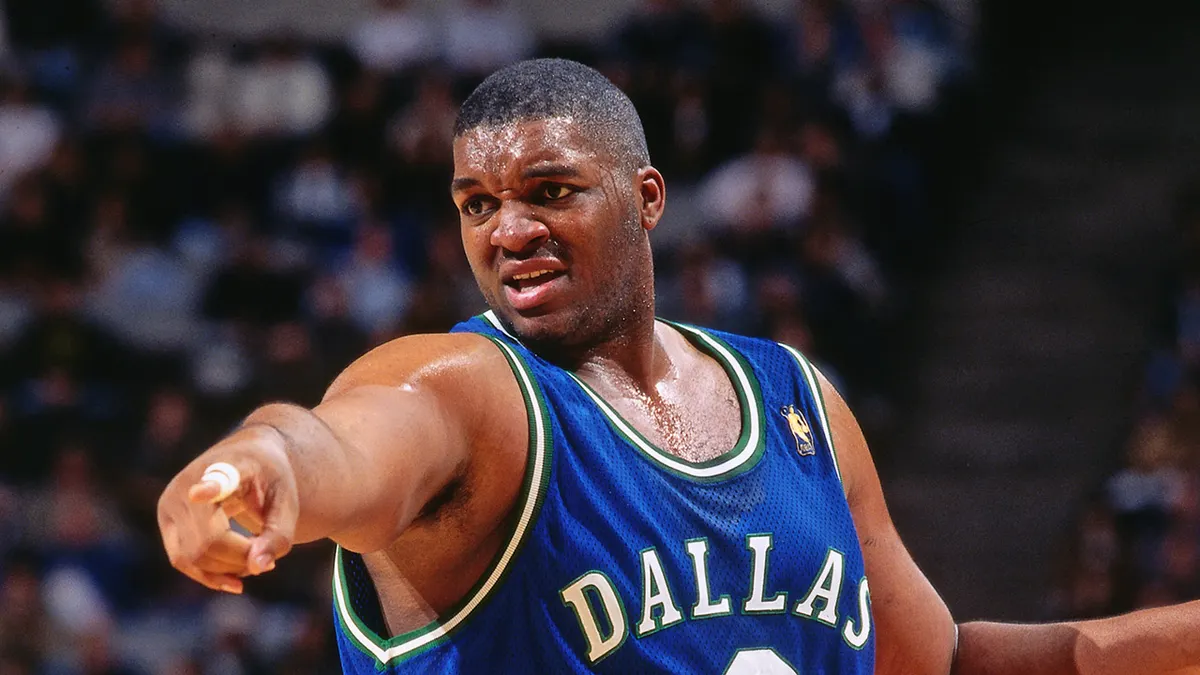
Oliver Miller’s Net Worth: Income, Career and Success
Oliver Miller’s net worth tells a cautionary and ultimately human story about financial mismanagement, personal struggle, and the complex realities of life after professional basketball.
Once one of the most physically imposing centres in the NBA during the 1990s, Miller’s career was defined as much by his significant weight issues and off-court controversies as by his considerable basketball talent.
His financial journey mirrors the experiences of many professional athletes who earn millions but struggle to translate short-term wealth into long-term security.
Who Is Oliver Miller?
Oliver Miller was born on April 6, 1970, in Fort Worth, Texas.
He played college basketball at the University of Arkansas under legendary coach Nolan Richardson, where he was a key contributor to the Razorbacks’ powerful early 1990s squads.
Miller was selected by the Phoenix Suns in the first round of the 1992 NBA Draft with the 22nd overall pick — a selection that reflected genuine belief in his talent as a skilled, passing big man.
Standing at 6 feet 9 inches, Miller was known for possessing an unusually refined skill set for a player of his size, with excellent court vision, soft hands, and reliable post moves.
However, his weight — which fluctuated dramatically throughout his career and at times reportedly exceeded 375 pounds — became an ongoing professional and personal challenge that significantly limited his effectiveness and longevity.
Oliver Miller Net Worth and Career Earnings
| Category | Estimated or Known Figure |
|---|---|
| Estimated Current Net Worth | Approx. $500,000 or below |
| Total NBA Career Earnings (estimated) | $10 million – $15 million |
| NBA Draft Position | 22nd overall, 1992 (Phoenix Suns) |
| NBA Teams Played For | Suns, Raptors, Pistons, Mavericks, Kings, Grizzlies |
| Career Span (NBA) | 1992 – 2005 (intermittent) |
| Known Financial Issues | Tax liens, reported financial difficulties |
Oliver Miller net worth today is estimated to be significantly lower than what his NBA earnings might suggest.
Despite earning an estimated $10 million to $15 million during his professional basketball career across multiple NBA franchises, Miller encountered serious financial difficulties in the years following his playing days.
Reports of tax liens and financial mismanagement have been associated with his post-career period, a situation that unfortunately is not uncommon among professional athletes who lack robust long-term financial planning.
Career Highlights and Team History
| Season/Period | Team |
|---|---|
| 1992–1994 | Phoenix Suns |
| 1995–1996 | Toronto Raptors |
| 1996 | Detroit Pistons |
| 1997 | Dallas Mavericks |
| 1997–1998 | Sacramento Kings |
| 2003–2005 | Memphis Grizzlies (final NBA stint) |
Miller’s time with the Phoenix Suns during the early 1990s represented the peak of his NBA relevance, as he played alongside Charles Barkley and Kevin Johnson on one of the league’s most exciting teams of the era.
His role as a passing, offence-initiating centre was ahead of its time in many respects, and basketball analysts have noted that a version of Oliver Miller operating in the modern NBA — with its emphasis on skilled big men — might have enjoyed a far more celebrated career.
Oliver Miller Net Worth: The Weight Controversy and Its Financial Impact
The most significant factor in Oliver Miller’s failure to maximise his earnings potential was his ongoing battle with weight management.
Teams repeatedly questioned his conditioning, which led to contract disputes, reduced playing time, and early termination of several agreements.
His inability to maintain a weight that satisfied NBA franchise medical and performance standards directly limited his earning potential and shortened his effective career window by what many analysts estimate could have been five or more years.
Had Miller maintained elite conditioning throughout a full decade-long career, his total earnings — and therefore his current net worth — could have been substantially higher.
Oliver Miller net worth today stands as a reminder that athletic talent alone does not guarantee financial security, and that career longevity, professional reputation, and financial literacy are all essential components of lasting wealth in professional sport.