Canada’s Tourism Freeze on US Destinations: Inside the Cross-Border Travel Boycott
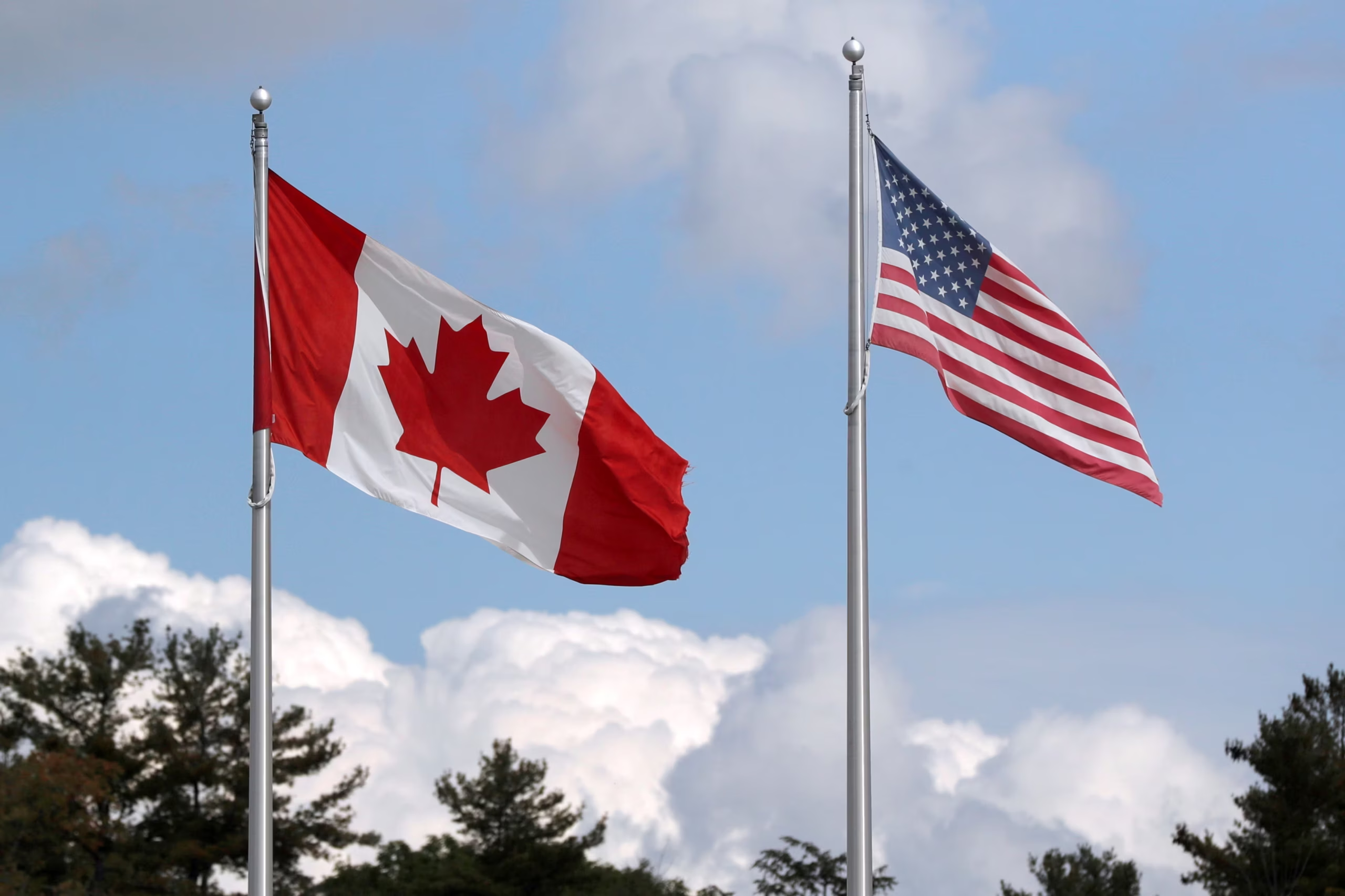
Canada called for a tourism freeze to US tourist destinations following a trade war with Washington.
What began as scattered frustration over tariffs and political rhetoric has hardened into one of the most sustained tourism boycotts in modern memory. Canadian travel to the United States has now declined for well over a year straight, and the numbers point to a genuine structural shift rather than a passing dip.
The Scale of the Decline
Canadian visitation to the U.S. is down roughly 35% since President Trump returned to office. The boycott stretched across thirteen consecutive months of decline heading into 2026, with visitor numbers sliding by double digits in February alone. Road trips, the most common way Canadians cross the border, dropped 15% year-over-year that month, while air travel from Canada fell 18%.
Industry veterans describe it as unprecedented. One prominent travel-industry executive noted that in nearly four decades in the business, he had never seen a consumer-driven boycott this effective or this sustained.
What’s Driving It
Survey data shows roughly six in ten Canadians say U.S. government policies, trade practices, and political statements have made them less likely to travel south. Of those whose plans have shifted, about three-quarters cite both tariffs and rhetoric from U.S. political leaders as the primary factors. Separate polling found that two-thirds of Canadians who chose to boycott U.S. travel in 2026 point to political tension between the two countries as their main reason. A weak Canadian dollar against a strong U.S. dollar has reinforced the trend, making it easier financially to look elsewhere.
The Economic Toll on the US
The dollar figures are substantial. The boycott has already cost the American economy an estimated $4.5 billion in direct losses, with total 2025 international tourism losses tied largely to the drop in Canadian visitors estimated at over $5.7 billion. In 2024, Canadian tourists injected roughly $20.5 billion into the U.S. economy and supported around 140,000 American jobs — a revenue stream that has been drying up fast.
Airlines have restructured in response. One major Canadian carrier suspended all U.S. routes for summer 2026, while the two largest airlines cut U.S. capacity by 19% and 7% respectively, and a budget carrier slashed its U.S.-bound seat offerings by more than half. Overall, carriers have cut close to 450,000 seats from Canada-to-U.S. schedules for early 2026. Hotels, restaurants, and attractions in areas popular with Canadian visitors — particularly Florida and other coastal regions — are reporting lower occupancy and traffic.
Where Canadians Are Going Instead
Canadians aren’t staying home; they’re redirecting their travel spend elsewhere. International travel from Canada is up roughly 5% year-over-year, with strong demand for Europe, Mexico, and domestic trips within Canada itself. Canada’s national tourism organization projects this shift, combined with rising interest from other countries, will boost the domestic tourism economy by nearly $141 billion in 2026 — a 6% increase over the prior year. Longer term, total Canadian tourism revenue is projected to reach over $216 billion by 2035.
Notably, the imbalance runs both ways: while Canadian road trips to the U.S. have fallen sharply, American visits to Canada have actually risen modestly over the same period.
Early Signs of a Thaw?
There are faint indications the freeze may be loosening. Mid-2026 data showed outbound Canadian travel to the U.S. edging up slightly year-over-year — the third straight month of incremental growth. Still, total traveler volume remained around 29% below pre-boycott norms, and analysts expect it will take years for U.S. tourism to fully recover even if diplomatic relations stabilize.
For now, the boycott stands as a striking example of consumer sentiment reshaping an entire cross-border industry, and a reminder that political tension carries real, measurable economic weight.